
Key fence design trends for mountain properties
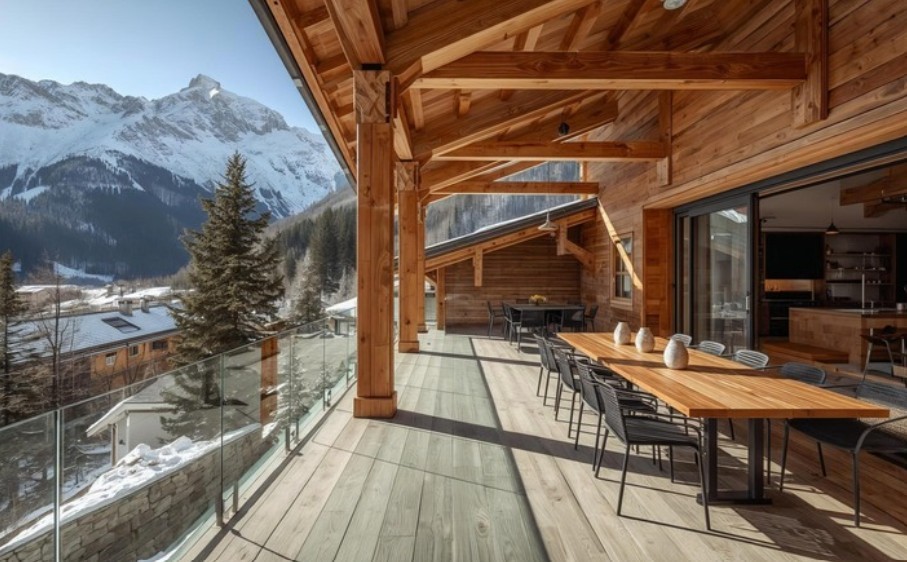
When designing fences for mountain resorts, it is essential to take into account heavy snow loads, exposure to ice and wind, preservation of views, minimal maintenance, and a contemporary aesthetic. Below, we present modern fencing systems that are particularly well suited for mountain properties.
Glass railings are one of the most desirable solutions for mountain properties because they allow almost complete visual transparency. The system is based on large laminated or tempered glass panels, discreetly secured using minimal posts, spigots, or concealed floor-mounted profiles. In this way, the railing becomes almost “invisible,” while the view of the mountains, ski slopes, and natural landscape remains the focal point.
Why are glass railings an ideal choice for mountain resorts?
- They provide uninterrupted panoramic views and maximize openness toward nature.
- They are designed to withstand high snow and wind loads typical of mountainous areas.
- They deliver a sophisticated, premium look that has become a standard in modern mountain resorts.
- They integrate perfectly into luxury terraces, spa zones, as well as ski-in/ski-out apartments.
Specifications and technical guidelines
- The use of laminated safety glass (tempered + laminated) is recommended, as it is resistant to impacts, snow, ice, and freeze–thaw cycles.
- Load-bearing elements (posts and spigots) should be made of stainless steel or properly protected aluminum, resistant to aggressive climatic conditions.
- Anchors must allow tolerance for thermal movement of the structure, snow loads, and ice impacts.
- Design must comply with applicable European and local standards.
- Proper drainage of melting snow must be ensured, and horizontal surfaces where ice can accumulate should be avoided.
- As added value, anti-icing coatings and integrated LED lighting in handrails can be considered to enhance safety and ambiance.
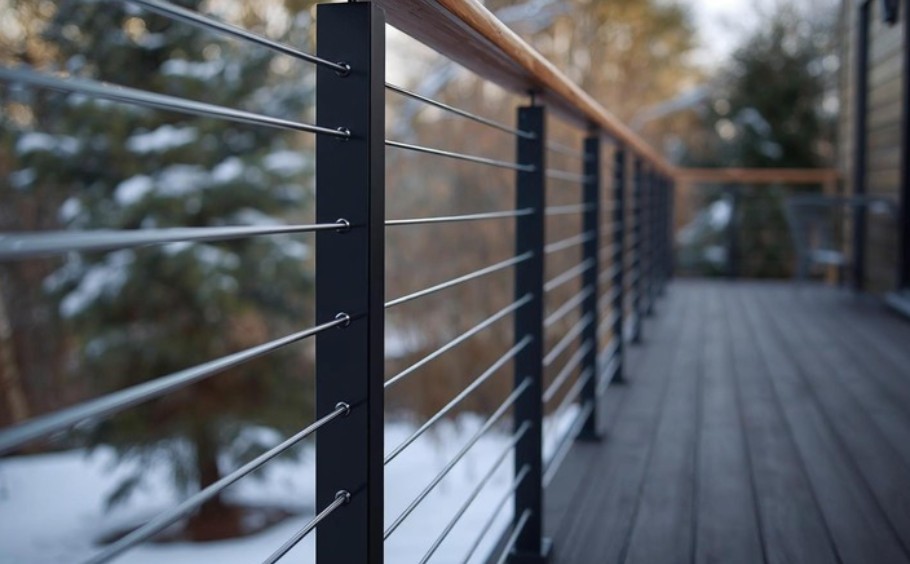
Stainless steel cable (wire) railings – transparency and contemporary structural lightness
Stainless steel cable railings represent a minimalist and technically sophisticated solution that perfectly complements contemporary mountain architecture. The system consists of thin stainless steel cables, tensioned horizontally or vertically between metal posts, with a discreet handrail. Thanks to their fine structure, the cables almost disappear within the space, providing exceptional transparency and visual lightness.
They are most suitable for terraces with panoramic views, outdoor circulation areas, ski terraces, as well as deck zones of restaurants and lounge areas at higher altitudes.
Why are stainless steel cable railings ideal for mountain conditions?
- They provide an almost unobstructed view of valleys, mountain peaks, and the natural landscape.
- Their minimalist design fits perfectly with modern mountain architecture, where glass, wood, and metal intertwine.
- They are highly versatile for use in different areas of a property—from terraces and outdoor galleries to restaurant platforms and ski lodge spaces.
Specifications and technical guidelines
- The use of stainless steel resistant to moisture, snow, salt, and freeze–thaw cycles is required.
- Posts and the supporting structure must be designed to withstand the tension forces of the cables, as well as additional snow and wind loads.
- The spacing between cables must comply with applicable standards and local regulations.
- The handrail should provide a secure grip in wet and icy conditions, with an anti-slip surface and proper drainage.
- Anchoring and the base of the structure must be resistant to ground movements caused by freezing.
- Periodic maintenance includes inspection and retensioning of the cables, especially after the winter season.
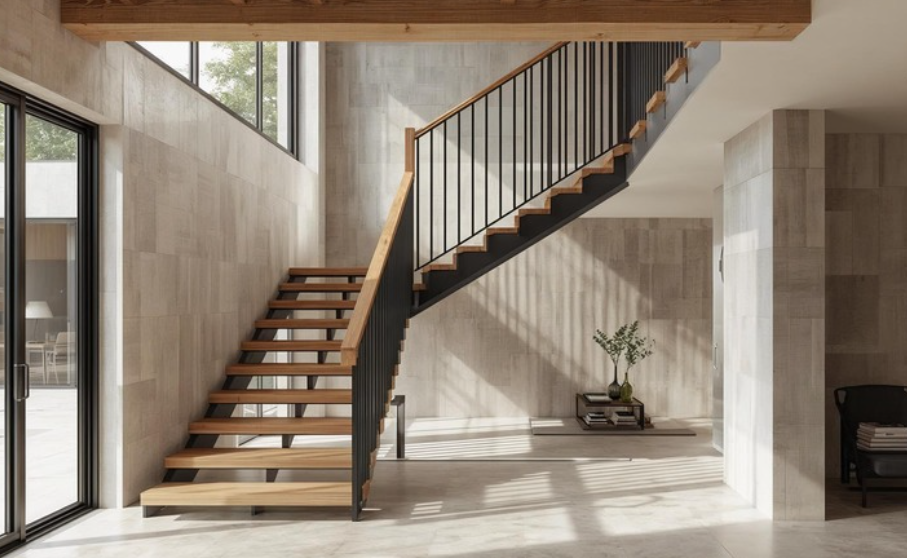
Hybrid railing systems – combination of metal and wood
Hybrid railing systems represent a fusion of natural and industrial materials, combining wooden handrails or posts with metal infills in the form of verticals, horizontal bars, or perforated panels. This combination merges the warmth and tactile quality of wood with the precise geometry and durability of metal, creating a visually rich yet controlled architectural expression.
They are most suitable for boutique lodges, modern mountain apartments, restaurants, and spa terraces that aim for a warm yet contemporary architectural identity.
Why are hybrid railings especially popular in mountain resorts?
- Wood brings an authentic Alpine character and natural warmth to the space.
- Metal provides durability, slimmer profiles, and a high level of resistance to harsh climatic conditions.
- The aesthetic balance between traditional and contemporary makes these systems highly sought after in boutique resorts and luxury mountain properties.
Specifications and technical guidelines
- Wooden elements should be made from high-quality, durable types of wood, with adequate protection against moisture, snow, and UV radiation.
- Metal components are most commonly made of stainless steel or powder-coated steel/aluminum, in colors coordinated with the building’s architecture.
- Special attention must be given to the expansion between wood and metal, as these materials behave differently under temperature changes.
- The handrail should be ergonomically shaped and free of wide horizontal surfaces to prevent snow and ice accumulation.
- Wood requires periodic maintenance (oiling or protective coatings), while the metal structure should be inspected after the winter season to ensure the system’s longevity.