
Why do architects choose curved glass railings?
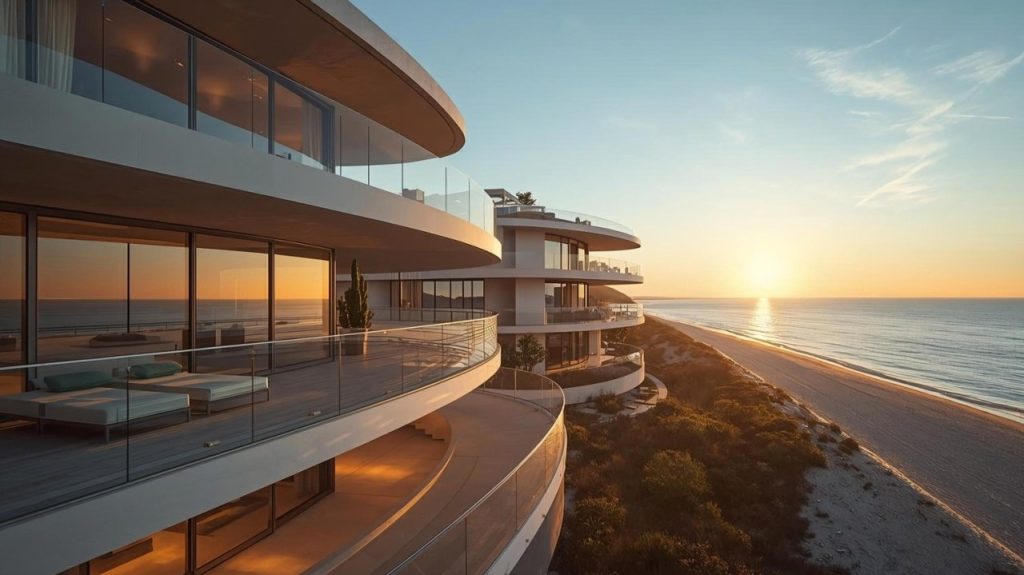
In contemporary architectural projects, gentle curves, fluid façades, and balconies that almost imperceptibly follow the contour of the building are appearing more and more often. At first glance, such architecture seems simple and elegant. However, behind that elegance lies a complex technical process that requires careful planning and precise coordination between architects, structural designers, and construction contractors.
During the realization of various projects, it has become clear that curved glass railings can strongly contribute to the character and recognizability of a building. However, their quality and functionality largely depend on whether they are properly considered in the early stages of design. When such systems are introduced later or without adequate coordination between designers and contractors, technical difficulties often arise during construction. This is precisely why it is important to understand why architects are increasingly using curved lines and what the key conditions are for their successful implementation.
Why architects are increasingly using curved lines
A curved line introduces visual softness into architecture and softens strict rectangular geometry. Buildings designed this way appear more elegant and harmonious, which is why curved glass railings are often used in higher-end residential projects, hotels, tourist complexes, and modern office buildings, where architecture plays an important role in shaping the identity of the building.
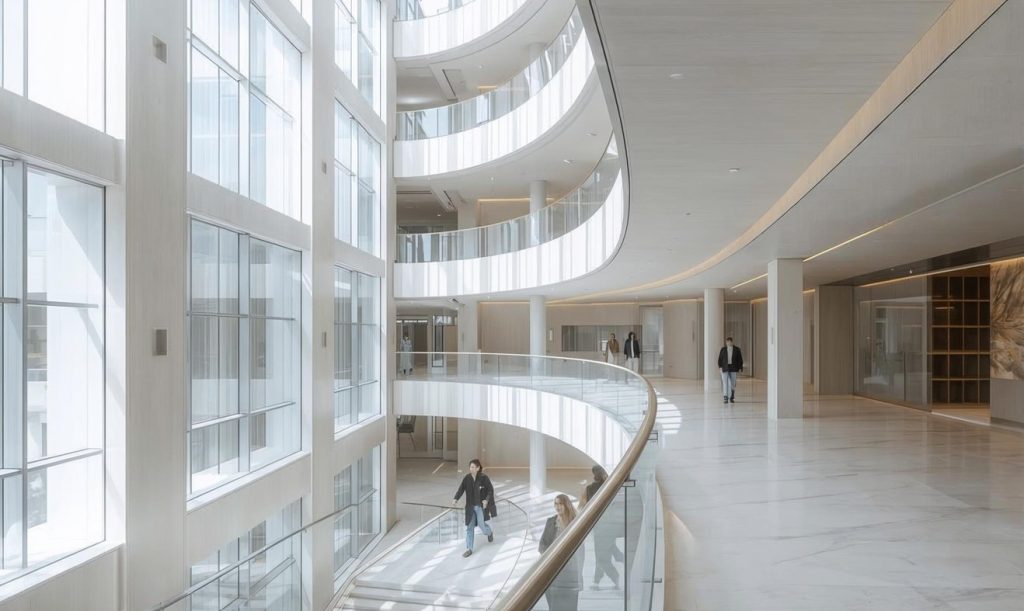
Another advantage is the continuity of the view. Unlike straight-line systems, curved railings allow an uninterrupted visual line, which is especially noticeable on balconies with panoramic views and galleries inside buildings.
At the same time, such architectural solutions help position a project more clearly in the market. Buildings with curved lines often have a stronger visual identity and stand out more easily compared to typical straight-lined façades.
Important decisions in the design phase
For curved glass systems, key decisions are made already in the design phase, because later changes leave very little room for corrections. The most important step is to precisely define the radius of the curve and the continuity of the line along the façade or balcony. Any subsequent change can significantly complicate the production of curved glass.
Early coordination with the building’s structural system is equally important, since a glass railing is part of the fall-protection system. For that reason, it is necessary to align anchoring positions, structural load capacity, parapet heights, and static requirements.
It is also important to define the installation method in advance—whether floor profiles, point fixings, or post systems will be used—because each of these solutions affects how the structure must be designed.
Material selection
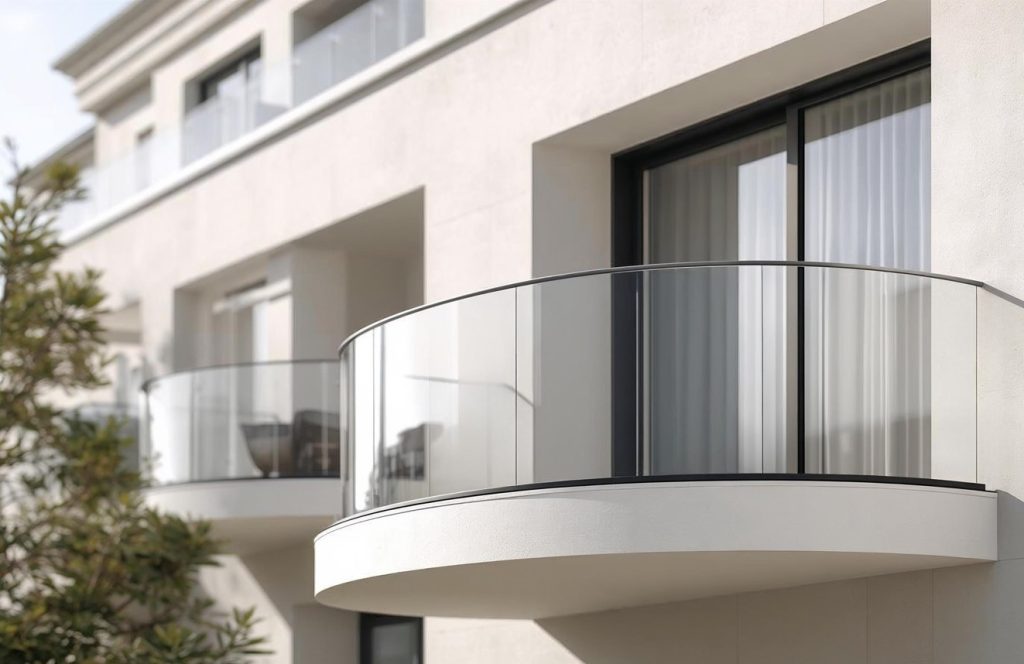
The quality of materials has a decisive impact on the durability and safety of curved glass systems. Thermally bent, tempered, and laminated glass is typically used, most often in a configuration of two layers of tempered glass bonded with a protective interlayer. The choice of interlayer and glass thickness is determined according to the project’s structural requirements.
In addition to the glass configuration, optical quality and proper panel sizing are also important. The substructure must allow precise leveling and long-term stability, which is why aluminum profiles, galvanized steel, or stainless steel are most commonly used, with appropriate corrosion protection and compatibility with the waterproofing system.
If a handrail is planned, it must be bent to the same radius as the glass panels, because even the smallest deviations can be visually noticeable.
Challenges during installation
The construction phase is often the most sensitive part of implementing curved glass systems. Before glass production begins, precise geodetic measurements are required to confirm the actual radius of the structure, because even minimal deviations can make installation difficult. Tolerances in concrete and steel structures also present a challenge, since curved systems leave far less room for corrections than straight-line solutions.
Logistics also require special attention, as curved glass panels are often larger and heavier. For that reason, it is important to carefully plan transportation, handling, and the sequence of work in coordination with the façade, waterproofing, and final floor finishes.
Installation precision
Installing curved glass railings requires a high level of precision. The process is carried out through several carefully controlled steps. First, the radius is verified and the floor profile is leveled. After that, the glass panels—usually numbered according to the installation sequence—are carefully placed and positioned. This is followed by checking vertical alignment, fine system adjustments, and final sealing.
A key rule from practice is that bent glass cannot be corrected later on the construction site. If the project is not properly prepared, the problem cannot be solved through improvisation during installation.
Curved glass railings are far more than an aesthetic element. They are the result of carefully coordinated work between architects, designers, and contractors. When a project is managed properly, these systems contribute to a stronger architectural identity of the building, a higher-quality panoramic spatial experience, and a higher perceived value of the project.
Their successful realization always depends on one key principle: precision at every stage of the project, from the first concept to the final installation on site.
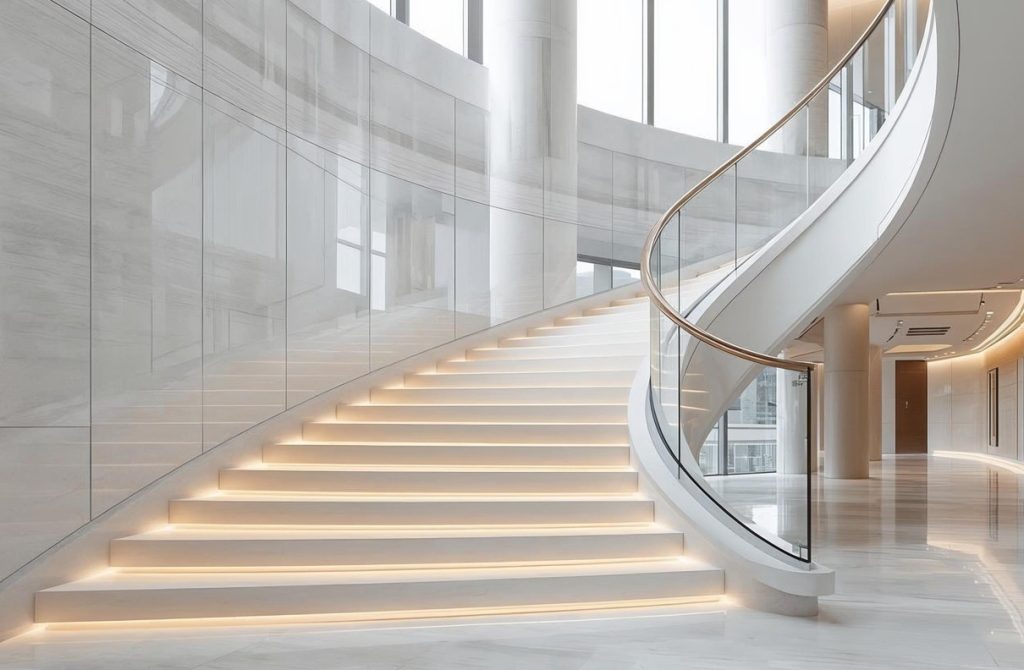
If you are planning a project with curved glass railings and want to verify technical solutions, radii, structural details, and installation methods already in the early stages, our expert team can assist you through technical consultations and project analysis.
We invite you to schedule a consultation by sending an inquiry through our website. We will gladly work together with your project team to find the optimal solution for your building.